

Hiring a full-service, in-house digital agency is the fastest and most reliable way for an Ontario SMB to get a measurably better website — one that looks sharp, loads fast, and converts visitors into leads. The standard to beat is Google Core Web Vitals for performance, and the research is clear: visitors form a credibility opinion in under a second. Start with Cloudsprout’s free full digital audit — no obligation, no sales pressure, just a clear picture of where your site stands today.
Key Takeaways
A cooler website for an Ontario SMB means faster load times, a clear value proposition above the fold, and a conversion path built around real local signals — not just a visual refresh.
| Point | Details |
|---|---|
| Hire for conversion, not aesthetics | An agency-led site combines design, performance, and local SEO in one delivery. |
| Five pages is enough to start | Home, services, about, portfolio, and contact cover the full conversion path for most service SMBs. |
| Demand ownership and transparency | Insist on CMS access, source files, and month-to-month pricing with no lock-in. |
| Speed is a ranking factor | Target mobile load times under 2–3 seconds; slow pages hurt both conversions and Google rankings. |
| Cloudsprout’s free audit | Cloudsprout offers a no-obligation full digital audit as the first step for Ontario SMBs. |
Table of Contents
- What actually makes a website “cooler” for a small business?
- DIY, freelancer, or agency — which path is right for you?
- What should a good agency actually deliver?
- What questions should you ask before hiring an agency?
- Ten fast fixes that make any SMB site noticeably better
- Cloudsprout builds your site in-house, with no lock-in
- Why in-house work and flexible contracts matter more than you think
- Sources
- FAQ
What actually makes a website “cooler” for a small business?
“Cooler” is not a design opinion. For a local service business in Ontario, it means a site that communicates your value in three to five seconds, loads without friction on a phone, and turns visitors into booked calls. The industry term for this is conversion-centered design, and it has measurable components.
Every effective SMB site needs these elements working together:
- Clear value proposition above the fold. Your hero section should answer “what do you do and who do you serve?” before the visitor scrolls.
- Visible phone number and contact info. On mobile, that number should be a tap-to-call link, not text you have to copy.
- One strong CTA. “Get a Free Quote” beats “Learn More” every time for service businesses.
- Real photos. Your team, your truck, your finished job. Stock photos signal generic; real photos signal trust.
- Mobile-first layout. Responsive design with readable text and prominent contact methods on small screens are non-optional in 2026.
- Fast load times. Target fast load times on mobile. Slow pages drive abandonment and hurt your Google rankings.
- Trust signals. Google reviews, licensing badges, and a few real project photos do more than any tagline.
- Short, focused forms. Three fields beat ten. Name, phone, and “what do you need” is enough to start a conversation.
- Local signals. Service-area pages, your city in the page title, and a linked Google Business Profile all feed local search.
For local businesses specifically, clarity of purpose matters more than adding pages. Your homepage must immediately answer “what do you do?” and “how do you solve my problem?” before anything else.
Pro Tip: Pull up your own site on a phone you’ve never used before and time how long it takes to find your phone number. If it takes more than five seconds, you’re losing calls.
DIY, freelancer, or agency — which path is right for you?
The honest answer depends on your budget, timeline, and how much the site needs to do for your business. Here’s how the three routes compare for a typical Ontario service SMB:
| DIY Template | Freelancer | Full-Service Agency | |
|---|---|---|---|
| Typical cost | Under $500 | $2,000–$8,000 | From ~$5,000 |
| Time to launch | Days to weeks | 4–10 weeks | 6–12 weeks |
| Custom design | Limited | Moderate | Full |
| SEO setup | Basic/manual | Varies widely | Included |
| Performance optimization | DIY | Often extra | Included |
| Ongoing support | Self-serve | Ad hoc | Structured |
| Biggest risk | Looks generic, no SEO | Inconsistent quality | Higher upfront cost |
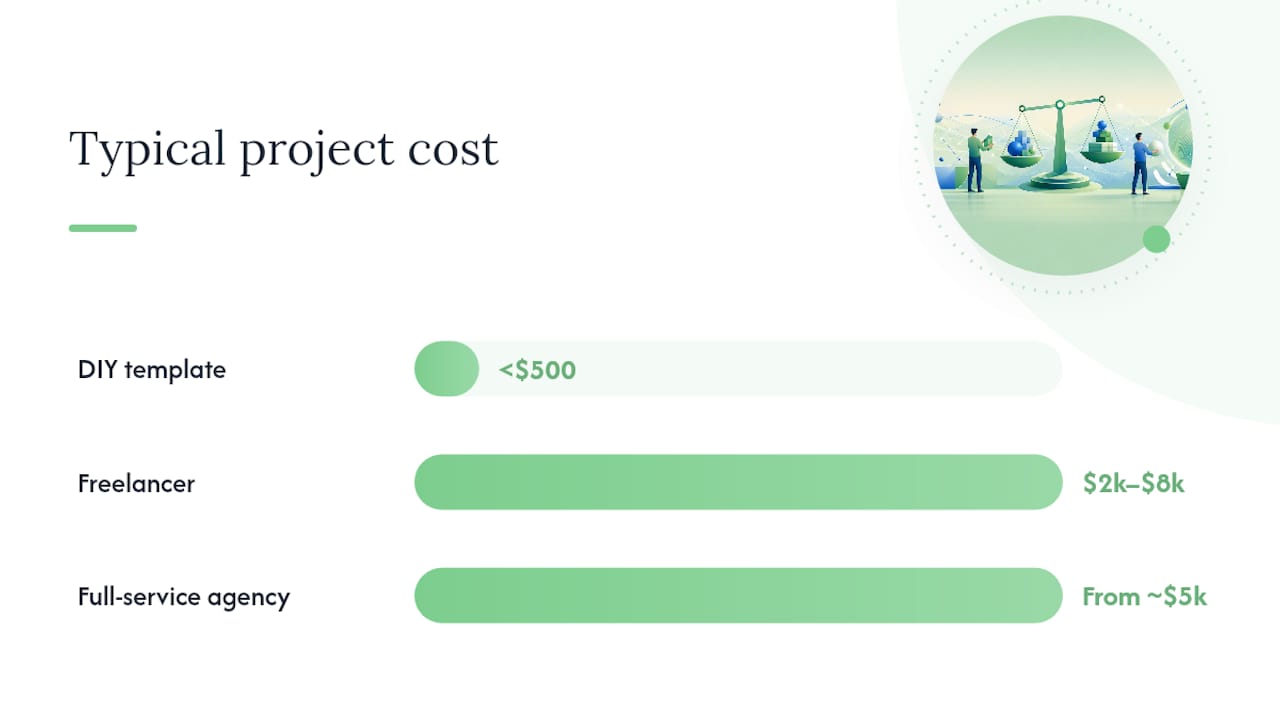
Cost ranges are sourced from market pricing data for SMB web projects.
For most Ontario service businesses focused on lead generation, an agency-led custom site delivers the best return on investment. A focused five-page site — home, services, about, portfolio/testimonials, contact — covers the full conversion path and launches faster than a sprawling build.
What should a good agency actually deliver?
A professional agency follows a predictable workflow. Content readiness and client approvals are the biggest variables that stretch timelines, so know what you’re committing to before you sign.
Typical milestone timeline for a 5-page SMB site:
| Phase | What happens | Typical duration |
|---|---|---|
| Discovery | Goals, audience, competitors, sitemap | 1–2 weeks |
| Content & brand assets | Copy, photos, logo files gathered | 1–2 weeks |
| Design mockups | Homepage and key pages reviewed | 1–2 weeks |
| Development | Build, CMS setup, mobile testing | 2–3 weeks |
| QA and revisions | Cross-device testing, form checks | 1 week |
| Launch and handover | Go-live, training, documentation | 3–5 days |
Total: roughly 6–10 weeks for a focused 5-page site. A mid-sized site with 10–20 pages typically runs 10–16 weeks.
Deliverables to insist on before you sign anything: source files, full CMS admin access, image optimization, meta titles and descriptions on every page, performance checks against Core Web Vitals, and a handover session with documentation. You should own your site outright, with no dependency on the agency to keep it live.
On pricing, three models are common. A fixed-price rebuild covers a defined scope for a set fee. A retainer adds ongoing SEO, content, or marketing after launch. Month-to-month agreements let you scale up or down without a long-term commitment. Cloudsprout uses transparent month-to-month pricing with no lock-in contracts, and every engagement starts with a free full digital audit and direct access to the team doing the work.
Want this working in your business. Without doing it yourself?
Start a Project →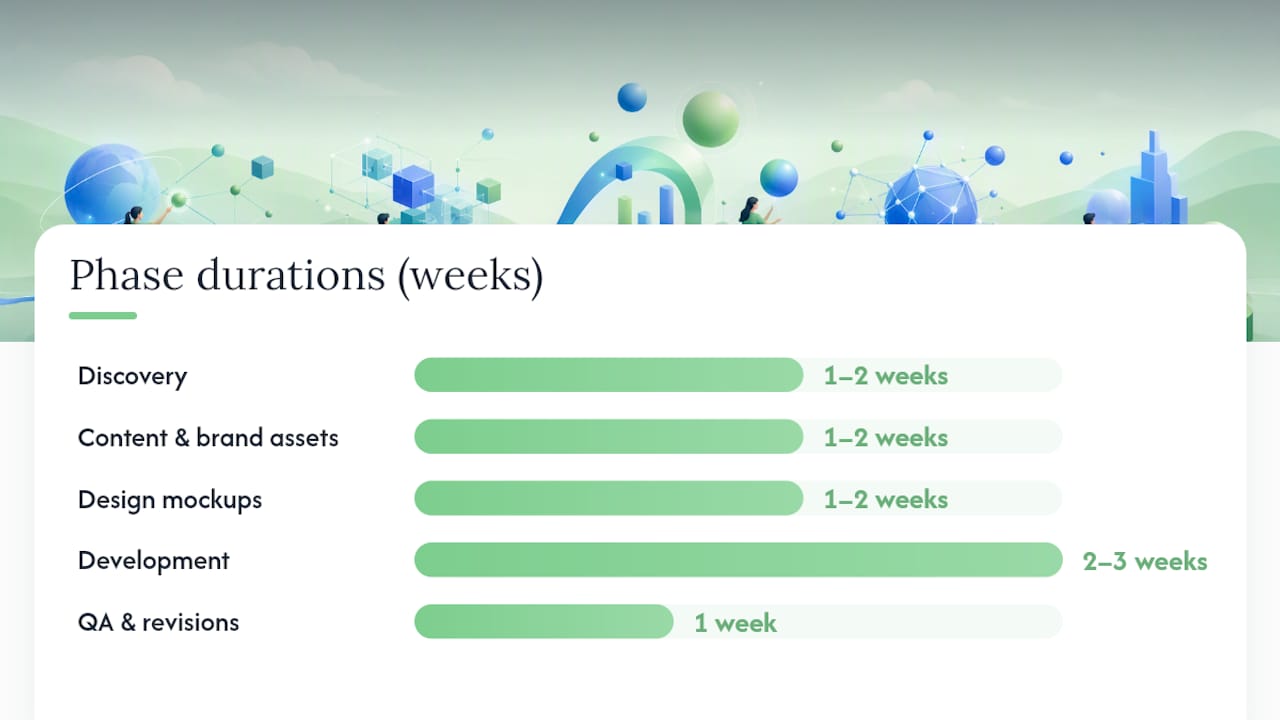
What questions should you ask before hiring an agency?
The wrong agency costs you time, money, and a site you don’t own. These questions cut through the pitch quickly:
- Who will actually do the work? Ask by name. If the answer is vague, the work is likely outsourced.
- Can I see three recent sites in my industry? Run them through Google PageSpeed Insights while you’re on the call.
- Who owns the code and hosting when we’re done? You should. Full stop.
- What’s your process if I need changes after launch? A good agency has a clear answer.
- What does the contract say about cancellation? Month-to-month is the standard to aim for.
- How do you measure success? Leads and conversion rate, not just traffic.
Red flags to walk away from: vague or bundled pricing with no line items, promises of “page one in 30 days,” no portfolio or a portfolio of irrelevant industries, outsourced work disclosed only when you ask, and contracts that lock you in for 12 months with no performance clause.
Pro Tip: Ask for a live URL from a recent client, then run it through PageSpeed Insights. A score below 50 on mobile tells you more than any sales deck.
Ten fast fixes that make any SMB site noticeably better
You can apply most of these in a day or two, with or without an agency. Each one has a measurable impact.
- Tighten your hero copy (owner). Cut it to one sentence: who you serve, what you do, and where. Clarity beats cleverness.
- Add a tap-to-call button (developer/owner). Pin it to the top of every mobile page. Calls are your fastest leads.
- Compress every image (developer). Use a tool like Squoosh or ShortPixel. Uncompressed images are the single most common reason for slow load times.
- Move your CTA above the fold (designer). If a visitor has to scroll to find “Get a Quote,” most won’t.
- Fix your meta titles (owner/developer). Every page needs a unique title under 60 characters that includes your service and city. Check your SEO basics checklist for a full walkthrough.
- Add one local service page (owner/writer). A page titled “Plumber in Barrie, ON” with 300 words of real content outperforms a generic services page for local search.
- Show three real project photos (owner). Before/after or finished-job shots. Label them with the city and job type for an extra local SEO signal.
- Shorten your contact form (developer). Name, phone, and one open field. Every extra field reduces completions.
- Enable caching and a CDN (developer). Plugins like WP Rocket or a Cloudflare free plan cut load times without touching your design. Mobile-first performance directly affects both rankings and conversions.
- Test on a real phone (owner). Open Chrome DevTools, switch to device simulator, and check every button size and form field. What looks fine on a desktop often breaks on a 375px screen.
Cloudsprout builds your site in-house, with no lock-in
Cloudsprout is an Ontario-based digital agency that does everything under one roof: custom website development, SEO, content, branding, and automation — all delivered in-house with zero outsourcing. Every project starts with a free full digital audit so you know exactly what needs fixing before spending a dollar. Pricing is transparent and month-to-month, which means no 12-month contracts and no hostage situations if your needs change. You get direct access to the team doing the work, not an account manager relaying messages.
Ready to see what your site could look like? Request your free audit or browse Cloudsprout’s website development services to see recent work and get a realistic scope for your project.
Why in-house work and flexible contracts matter more than you think
Most business owners assume all agencies work the same way. They don’t. The gap between an agency that outsources to a contractor in another country and one where the same person who built your mockup also writes your meta tags is enormous — in quality, in communication speed, and in accountability.
Month-to-month pricing is not just a sales point. It changes the relationship. When an agency can’t hold you to a contract, they have to earn your business every month. That’s the dynamic Cloudsprout is built around: transparency, in-house expertise, and results you can measure in leads and conversion rate, not just aesthetics.
Sources
- Small Business Website Design in 2026: The Complete Guide
- FSB | How to design a website for small businesses
FAQ
What does a cooler website actually cost for a small business?
DIY templates run under $500, freelancers typically charge $2,000–$8,000, and agencies start around $5,000 for a custom build. Most Ontario service SMBs get the best return from an agency-led five-page site.
How long does a website redesign take?
A focused five-page site with a full-service agency typically launches in 6–10 weeks. The biggest variable is how quickly you can supply content, photos, and approvals.
What is Google Core Web Vitals and why does it matter?
Core Web Vitals are Google’s performance metrics for load speed, interactivity, and visual stability. Sites that score well tend to rank higher and convert better, especially on mobile.
How do I know if my current site is hurting my leads?
Run your URL through Google PageSpeed Insights. A mobile score below 50, a load time over three seconds, or no visible CTA above the fold are the three clearest signs your site is costing you calls.
Does Cloudsprout offer a free audit before I commit?
Yes. Cloudsprout’s free digital audit covers your site’s performance, SEO basics, and conversion gaps with no obligation to proceed.
Recommended
Less reading. More growing.
We build the systems these articles describe. Websites, AI follow-up, reviews, automation. And run them for you.
Keep reading