

A digital presence audit is a structured, objective evaluation of a business’s online channels and assets to measure how well they support revenue goals. Also called an online presence assessment or digital marketing audit, it covers your website, SEO, paid ads, social media, email marketing, analytics, and user experience in one connected review. The goal is not to collect more data. The goal is to find what is working, what is wasting budget, and what to fix first. For small business owners and marketing managers, this kind of audit is the clearest path from scattered digital activity to focused, measurable growth.
What is a digital presence audit and what does it cover?
A digital presence audit evaluates multiple digital channels together to measure their effectiveness in meeting revenue goals. That “together” part matters. Reviewing your website in isolation tells you almost nothing about why leads are not converting. You need to see how each channel connects to the next.
A thorough audit covers these core areas:
- Website performance and UX. Page speed, mobile responsiveness, navigation clarity, and whether visitors can find what they need without friction.
- Technical SEO and content. Crawlability, indexing, metadata, site structure, and whether your content matches what your customers are actually searching for. A solid SEO health check is a non-negotiable part of any audit.
- Paid advertising efficiency. Ad spend versus return, audience targeting accuracy, and landing page alignment with ad messaging.
- Social media presence. Profile completeness, posting consistency, engagement rates, and whether your social activity connects back to business goals.
- Email marketing. Deliverability rates, open and click rates, list health, and whether your sequences move subscribers toward a purchase.
- Analytics and conversion tracking. Whether your Google Analytics, Google Tag Manager, or equivalent setup accurately tracks the actions that matter. Confirming accurate conversion tracking is a top priority because misattributed data leads to wrong budget decisions.
- Conversion rate optimization. Landing page design, calls to action, form usability, and user flows from first click to completed sale or inquiry.
A common misconception is that a digital audit is just an SEO or ad check. It must evaluate your entire marketing system end to end.
Pro Tip: Before starting any audit, write down your top three revenue goals. Every finding you uncover should be filtered through the question: “Does fixing this move me closer to those goals?”

How does a digital presence audit benefit small businesses?
The primary benefit is clarity. A digital presence audit transforms data into better decisions, not just more data. Small business owners rarely lack information. They lack a clear picture of which information actually matters.
Here is what a well-executed audit delivers:
- Budget recovery. You will find ad spend going to the wrong audiences, duplicate tools you are paying for, and channels that generate traffic but zero revenue.
- A prioritized action plan. The audit delivers documented findings with a prioritized action plan tied to expected impact, so you know what to fix first rather than trying to fix everything at once.
- Alignment between channels. You will see where your messaging breaks down. A paid ad might promise one thing while the landing page delivers something else entirely.
- Improved credibility signals. For local and small businesses, consistency of business identifiers and reputation signals are critical trust factors. Inconsistent phone numbers, addresses, or business names across directories actively hurt conversions even when your SEO traffic looks healthy.
- Better conversion rates. When tracking is accurate and user flows are fixed, the same traffic produces more leads and sales without spending more on ads.
Marketing managers should expect audits to connect channel activity to business value, not just report vanity metrics like follower counts or page views. An audit that only tells you your Instagram engagement dropped is not useful. An audit that tells you why it dropped and what it is costing you in leads is.
How to conduct a digital presence audit: practical steps
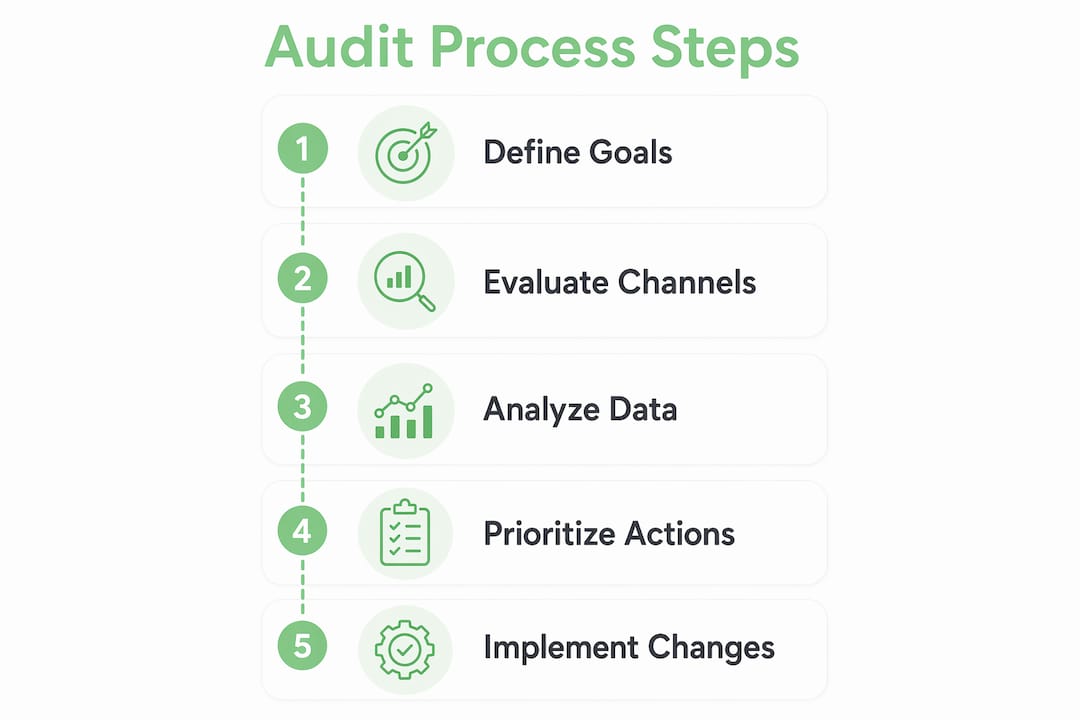
A digital presence audit can be performed internally or by specialists. Internal reviews are faster and cheaper. Professional audits are more thorough and cover the full buyer journey across multiple touchpoints. The right choice depends on your team’s capacity and how deep the problems run.
Here is a practical approach for small businesses:
- Define your scope and goals. Decide which channels you are auditing and what business outcomes you are measuring against. Auditing everything without a goal produces a report nobody acts on.
- Run consistency and completeness checks. Verify your Google Business Profile, social profiles, and directory listings all show the same name, address, phone number, and website URL. This takes one hour and often reveals trust-killing errors.
- Pull baseline analytics data. Export 90 days of traffic, conversion, and channel performance data. Look for gaps in tracking before drawing any conclusions from the numbers.
- Review each channel systematically. Work through website, SEO, paid ads, social, and email one at a time. Document what you find with screenshots and data, not just observations. Audits should explain causes and prioritize fixes by impact and dependencies, not just list problems.
- Map findings to the buyer journey. Effective audits examine buyer journeys across multiple touchpoints to identify root causes of performance issues. A drop in conversions might trace back to a broken tracking pixel, not a bad product.
- Prioritize by impact and effort. Ranking audit actions by impact and effort while considering dependencies prevents paralysis and accelerates results. Fix the things that move revenue first.
Pro Tip: Audit paralysis is real. If you finish an audit with 40 action items and no clear priority order, you will fix nothing. Cap your first action list at five items and assign an owner and deadline to each one.
For businesses with multilingual audiences or international SEO considerations, technical SEO for multiple languages adds another layer to the audit that many small businesses overlook entirely.
How does a digital presence audit differ from other digital audits?
The term “digital audit” covers several distinct processes, and confusing them leads to misaligned expectations and wasted effort.
A digital presence audit focuses on marketing performance. It asks: “Are our online channels visible, credible, and converting?” It covers SEO, paid ads, social media, email, website UX, and analytics. The audience for this audit is marketing managers and business owners.
A digital operations audit (sometimes called a digital transformation audit) asks a different question entirely: “Is our technology infrastructure aligned with our business strategy?” Digital transformation audits assess digital strategy, governance, and technology readiness. They examine IT governance, system integrations, data management, and organizational readiness. The audience is typically IT leadership and executives.
Want this running in your business without doing it yourself?
Book a Free Consultation →A digital brand audit sits between the two. It evaluates how consistently your brand identity appears across all digital touchpoints, including visual design, tone of voice, and messaging. It overlaps with a digital presence audit but goes deeper on brand perception and less deep on technical performance.
| Audit type | Primary focus | Typical audience |
|---|---|---|
| Digital presence audit | Online visibility, channel performance, conversions | Marketing managers, business owners |
| Digital operations audit | IT governance, technology readiness, digital transformation | IT leadership, executives |
| Digital brand audit | Brand consistency, messaging, visual identity across channels | Brand managers, marketing directors |
Clarifying which audit you need before starting saves time and ensures the findings are actually useful to the people responsible for acting on them. A small business owner who commissions a digital transformation audit when they need a marketing performance review will get a report they cannot use.
Key Takeaways
A digital presence audit is the most direct way for a small business to find out why its online channels are not producing the revenue they should.
| Point | Details |
|---|---|
| Audit scope covers seven channels | Website, SEO, paid ads, social media, email, analytics, and conversion UX must all be reviewed together. |
| Conversion tracking accuracy comes first | Inaccurate tracking produces misleading data that causes wrong budget decisions across every channel. |
| Prioritize by impact and effort | Ranking fixes by revenue impact and execution effort prevents paralysis and produces faster results. |
| Presence audits differ from operations audits | Digital presence audits focus on marketing performance; digital operations audits focus on IT governance and technology strategy. |
| Reputation signals affect conversions | Inconsistent business listings and weak social proof hurt conversions even when SEO traffic looks healthy. |
Why most audits I’ve seen miss the most important thing
The audits that actually change business outcomes share one quality: they follow the buyer. Not the channel. Not the platform. The buyer.
Most audits I review are channel reports dressed up as audits. They tell you your bounce rate is high, your email open rate is below average, and your Google Ads cost per click went up. What they do not tell you is why a person who clicked your ad, landed on your page, and read your offer still did not fill out the form. That is a buyer journey question, not a channel question.
The businesses that get the most value from an online presence assessment are the ones that treat it as a diagnostic tool for the full purchase path. They trace the customer from first search to final conversion and look for the exact moment the experience breaks down. Nine times out of ten, the problem is not traffic. It is a broken tracking setup, a mismatched message between ad and landing page, or a trust signal that is missing at the moment of decision.
The other mistake I see constantly is trying to fix everything the audit surfaces. A 40-item action list is not a plan. It is a way to feel busy while nothing changes. The digital marketing audit frameworks that produce real results rank every finding by revenue impact and execution effort, then assign the top five to specific people with specific deadlines. That is it. Run the audit, prioritize ruthlessly, execute the top items, and repeat quarterly.
Regular audits also catch opportunity, not just problems. A channel that was underperforming six months ago might now be your best source of leads if you fixed the tracking and improved the landing page. You will not know unless you look again.
— Cristo
Cloudsprout’s digital audit and website services for small businesses
Cloudsprout works with small and mid-sized businesses across Ontario and Canada to run thorough digital presence audits and act on the findings. Every new client starts with a free full digital audit that covers website performance, SEO health, social media, and conversion tracking before any work begins.

From there, Cloudsprout’s in-house team handles everything from website development that addresses audit findings directly, to SEO, content, and social media, all under one roof with no outsourcing. If your audit reveals gaps in your digital marketing services, Cloudsprout builds and executes the fix. There are no lock-in contracts and no account managers relaying messages to a team you never meet. You work directly with the people doing the work.
FAQ
What is a digital presence audit?
A digital presence audit is a structured review of a business’s online channels, including its website, SEO, paid ads, social media, email marketing, and analytics, to measure how well they support revenue goals and identify what needs to be fixed.
How long does a digital presence audit take?
A basic internal audit of a small business typically takes one to two weeks. A professional audit covering the full buyer journey and all channels can take two to four weeks depending on the scope and data available.
What is the difference between a digital audit and an SEO audit?
An SEO audit reviews only search engine visibility and technical site health. A digital audit covers SEO plus paid advertising, social media, email, analytics accuracy, and conversion performance across all channels.
How often should a small business run a digital presence audit?
A full audit once per year is the minimum. Quarterly reviews of key metrics, especially conversion tracking and channel performance, help catch problems and opportunities before they compound.
What is a digital brand audit?
A digital brand audit evaluates how consistently a brand’s visual identity, tone of voice, and messaging appear across all online touchpoints. It overlaps with a digital presence audit but focuses more on brand perception than technical marketing performance.
Recommended
Less reading. More growing.
We build the systems these articles describe. Websites, AI follow-up, reviews, automation. And run them for you.
Keep reading


One Page Voice Chart: 8 Brand Voice Examples Small Businesses Can Use
