

A solid Canadian business social media content plan is not a posting schedule. It’s a structured system that connects your business goals to the right platforms, the right content, and the right audience, with Canadian market realities built in from the start. The core components every plan needs:
- Clear goals aligned with business outcomes (brand awareness, leads, sales, customer retention)
- Platform selection based on where your Canadian audience actually spends time
- Content types that rotate across educational, promotional, inspirational, and user-generated formats
- A content calendar that keeps your publishing consistent and intentional
- Engagement tactics that build real community, not just follower counts
- Analytics and measurement to track what’s working and cut what isn’t
The Canadian market adds layers most generic guides skip: bilingual content requirements, regional cultural differences, and privacy laws that carry real consequences. Get those right and the rest of the plan holds together.
Which social media platforms work best for Canadian small businesses?
Most small businesses achieve better results by focusing on 1 to 3 social media platforms where their target audience is active, rather than spreading resources across every platform. Consistent, quality content on two platforms beats sporadic posts on six.
Here’s how the major platforms break down for Canadian businesses in 2026:
- Facebook reaches older demographics and supports video, events, and local community groups. It’s still the broadest network for trades, food service, and local retail.
- Instagram skews younger and rewards strong visuals. Restaurants, boutiques, fitness studios, and lifestyle brands tend to see strong returns here.
- LinkedIn is the right call for professional services, B2B companies, consultants, and anyone selling to other businesses. It’s where decision-makers in Canada spend their professional browsing time.
- TikTok excels with short-form video and younger audiences. If your product or service has a visual or educational angle, TikTok’s organic reach still outpaces most other platforms for new audience discovery.
The bilingual reality of Canada changes platform strategy too. Quebec-based businesses, or any brand serving French-speaking Canadians, need content that feels native in French, not just translated. A Facebook post that reads like it was run through a translation tool loses trust fast. Businesses serving both English and French markets often maintain separate content streams or use platform language-targeting features to serve the right content to the right audience.
Pro Tip: Before committing to a platform, spend two weeks observing where your existing customers are already engaging. Check your website referral traffic in Google Analytics to see which social channels are already sending you visitors.

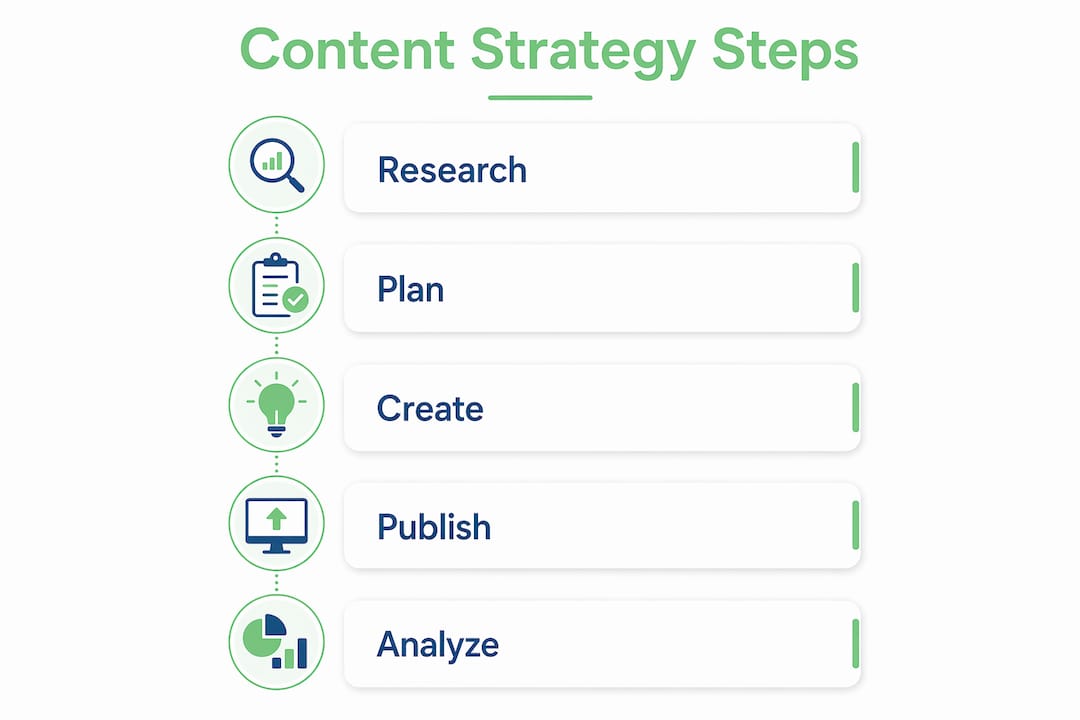
How to develop a content strategy that actually drives results
Business goals should drive content type decisions, not the other way around. If your goal is brand awareness, educational and inspirational content does the heavy lifting. If you’re pushing conversions, promotional content and testimonials move the needle.
A practical content mix for Canadian small businesses looks like this:
- Educational content (how-to posts, tips, explainers) builds authority and earns shares
- Promotional content (offers, product launches, service spotlights) drives direct action
- User-generated content (customer photos, reviews, reposts) builds social proof without production costs
- Inspirational content (behind-the-scenes, team stories, community involvement) builds emotional connection
- Seasonal and cultural content (Canadian holidays, local events, bilingual observances like Fête nationale) shows you understand your audience’s world
A content calendar keeps this mix from collapsing into a feed of random promotional posts. Plan one month ahead at minimum, and map content to Canadian seasonal moments: back-to-school in September, holiday shopping in November and December, and local events specific to your region. Posting frequency matters less than consistency. Three well-crafted posts per week outperform seven rushed ones every time.
For a deeper look at how content marketing principles connect to social strategy, the fundamentals transfer directly.
How do you measure social media ROI for a Canadian small business?
Tracking the right metrics monthly lets you adjust content and campaigns before a bad quarter becomes a bad year. The metrics that actually tell you something:
- Engagement rate (likes, comments, shares divided by reach) shows whether your content resonates
- Reach and impressions track how many unique accounts see your posts
- Click-through rate measures how often viewers take the next step to your website
- Conversions connect social activity to real business outcomes: form fills, purchases, calls
- Video views and watch time indicate whether your video content holds attention
Google Analytics with UTM parameters is the most reliable way to connect social traffic to website behavior. Add UTM tags to every link you post on social media, and Google Analytics will show you exactly which platform and which post drove a visit, a lead, or a sale. Platform-native tools like Meta Business Suite and LinkedIn Analytics fill in the engagement picture that Google Analytics misses.
Monthly reviews beat quarterly ones. A month is long enough to see patterns and short enough to correct course before you’ve wasted a full quarter on content that isn’t working.
Paid social advertising versus organic reach: what Canadian businesses need to know
Organic reach on most platforms has declined over the past several years, and Canadian businesses need to plan around that reality. Facebook’s organic reach for business pages is a fraction of what it was five years ago. Instagram and LinkedIn have followed similar trajectories.
Paid social advertising fills that gap by targeting specific audiences with measurable budgets. The practical breakdown:
- Organic content builds long-term trust, keeps your existing audience engaged, and costs nothing but time
- Paid ads extend your reach to new audiences, accelerate results, and let you target by location, age, language, interests, and behavior
- Boosted posts sit in between: you take an organic post that’s already performing well and pay to push it to a larger audience
For Canadian businesses, geo-targeting is particularly useful. A plumber in Hamilton doesn’t need to pay for impressions in Vancouver. Language targeting lets you serve French content to Quebec users and English content elsewhere, without maintaining two separate ad accounts.
Want this running in your business without doing it yourself?
Book a Free Consultation →A reasonable starting point for a small business testing paid social is a modest daily budget on one platform, run for 30 days, with a single clear objective (website clicks, lead form submissions, or page follows). Measure the cost per result, compare it to other acquisition channels, and scale what works.
Why depth beats breadth: the case for fewer platforms done well
Industry experts consistently point to consistent, deep engagement on a select few platforms as the driver of real social media results for small businesses. The temptation to be everywhere is understandable, but it almost always produces the same outcome: thin content, inconsistent posting, and no clear audience on any platform.
Industry experts and research consistently point to being active on one to three platforms as yielding the best return on investment for small businesses. The case for focusing deeply:
- Better content quality because your time and creative energy concentrate instead of scatter
- Stronger audience relationships built through consistent interaction rather than sporadic appearances
- Clearer brand voice that develops naturally when you’re not adapting to five different platform formats simultaneously
- More useful data because your analytics reflect real audience behavior on platforms you actually understand
For Canadian SMBs specifically, the bilingual and multicultural dimensions of the market make depth even more important. Doing French-language content well on one platform takes real effort. Doing it poorly on three platforms damages trust.
Pro Tip: Pick your primary platform based on where your best existing customers already spend time, not where you personally feel most comfortable. Then commit to it for 90 days before adding a second channel.
A broader digital marketing strategy should inform which platforms you prioritize, since social media works best when it connects to your website, email list, and SEO efforts.
What Canadian advertising and privacy laws apply to your social media plan?
Canadian businesses face specific legal obligations that most social media guides written for American audiences gloss over entirely. Ignoring them is not a minor oversight.
Canada’s Anti-Spam Legislation (CASL) governs commercial electronic messages, and its reach extends beyond email. Sponsored social media posts and direct messages sent for commercial purposes can fall under CASL’s requirements. You generally need express or implied consent before sending commercial messages, and every message must include a clear unsubscribe mechanism.
PIPEDA (Personal Information Protection and Electronic Documents Act) sets the rules for how you collect, use, and store personal data. If you run lead generation ads that collect names, emails, or phone numbers, you need a clear privacy policy, explicit consent, and a defined purpose for how you’ll use that data. Quebec’s Law 25 (formerly Bill 64) goes further, with stricter consent and data governance requirements for businesses operating in or targeting Quebec residents.
Advertising Standards Canada sets guidelines for truthful, accurate advertising. Influencer partnerships and sponsored content must be clearly disclosed. The Competition Bureau also enforces rules against misleading advertising claims, including on social media.
For bilingual compliance, federal government communications standards require both English and French in certain contexts. Private businesses aren’t always subject to the same rules, but businesses serving both language communities should treat bilingual disclosure and consent language as a baseline practice.
Which tools help you manage and automate your social media content plan?
The right tools reduce the time cost of consistency without sacrificing quality. Scheduling and analytics tools like Hootsuite, Buffer, and Sprout Social let you plan and queue posts across multiple platforms from a single dashboard, track engagement, and pull performance reports without logging into each platform separately.

Hootsuite is particularly common among Canadian businesses because it’s a Canadian company (headquartered in Vancouver) with strong bilingual support and integrations built for the platforms most used in Canada. Buffer suits smaller operations that want a clean, simple interface without enterprise-level complexity. Sprout Social offers deeper analytics and CRM-style features that suit businesses with dedicated marketing staff.
Beyond scheduling, a few other tools earn their place in a Canadian small business content workflow:
- Canva for creating on-brand graphics and short video content without a design team
- Google Analytics for tracking social referral traffic and connecting social activity to website conversions
- Meta Business Suite for managing Facebook and Instagram ads, pages, and inbox in one place
- Later for visual content planning, especially useful for Instagram-heavy strategies
For businesses that want to connect social media management to broader marketing automation, integrating your social tools with your CRM means leads from social ads flow directly into your pipeline without manual data entry.
Ready to build a social media presence that actually grows your business?
Cloudsprout is an Ontario-based digital agency that handles social media, content, SEO, and web development in-house, with no outsourcing and no lock-in contracts. If you’re a Canadian small business owner who wants a social media marketing plan built around your actual goals and your actual market, Cloudsprout offers a free digital audit to start. See the full range of digital marketing services available to Canadian SMBs.
Key Takeaways
A Canadian business social media content plan works when it combines focused platform selection, bilingual content awareness, legal compliance, and monthly metric reviews into one consistent system.
| Point | Details |
|---|---|
| Focus on 1–3 platforms | Small businesses achieve better results by focusing on 1 to 3 social media platforms where their target audience is active, rather than spreading resources across every platform. |
| Match content to goals | Rotate educational, promotional, user-generated, and inspirational content based on your current business objectives. |
| Measure monthly | Track engagement rate, reach, click-through rate, and conversions every month to catch problems early. |
| Know Canadian law | CASL, PIPEDA, and Quebec’s Law 25 create real compliance obligations for social media advertising and data collection. |
| Use scheduling tools | Tools like Hootsuite, Buffer, and Canva reduce the time cost of consistent posting without sacrificing content quality. |
Recommended
Less reading. More growing.
We build the systems these articles describe. Websites, AI follow-up, reviews, automation. And run them for you.
Keep reading
One Page Voice Chart: 8 Brand Voice Examples Small Businesses Can Use